Affiliate linksSome links pay us — we explain who, why, and when on our About page.
Simba Hybrid Review: The Back-Pain Mattress That Earns Its £999
We dug into the Simba Hybrid Pro against the mattresses that compete for the same bedroom (Emma Hybrid, Tempur Cloud, Otty Original). Where the conical springs and Aerocoil layer genuinely earn the £200-£400 premium over Emma, where they don't, and whether the 200-night trial is enough to know.
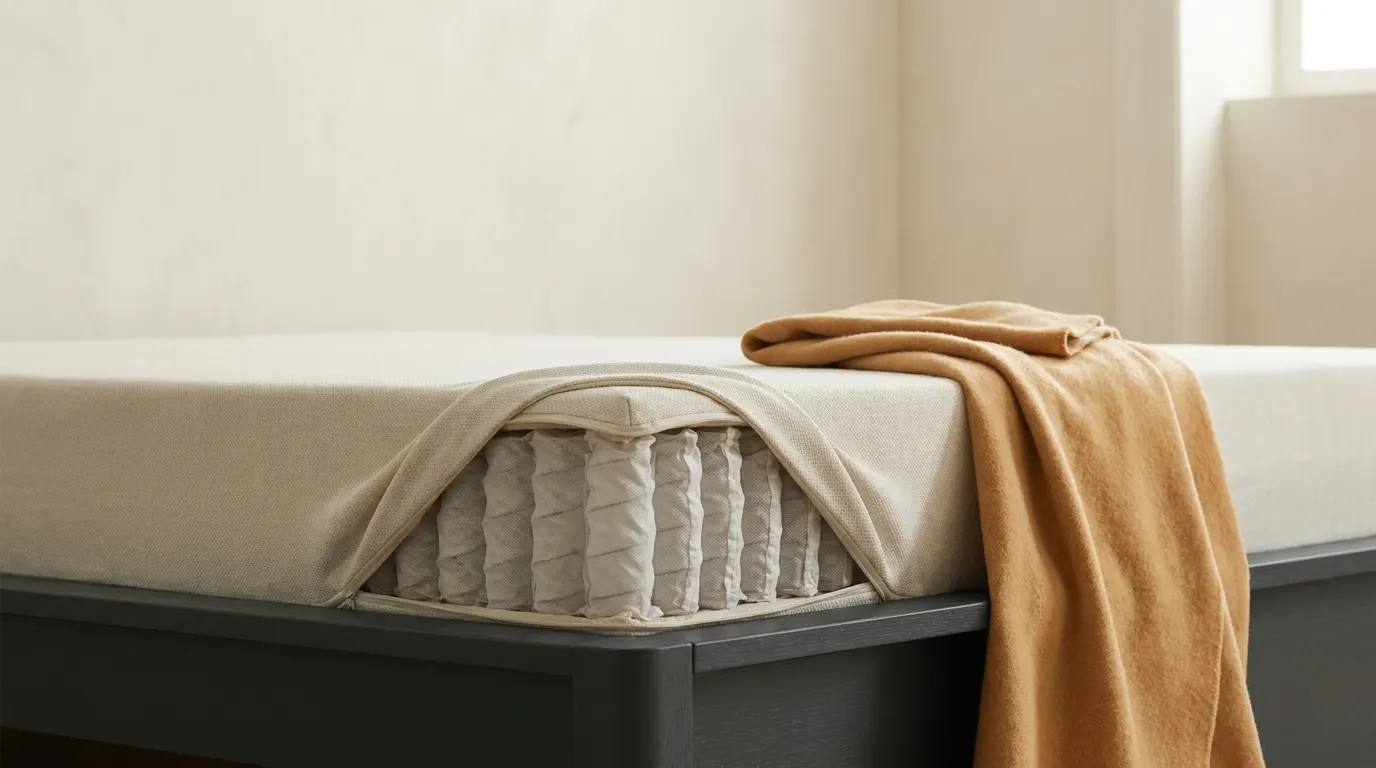
Every mattress review on the internet starts the same way: a sentence about transformed sleep, a hero shot, and 1,800 words of construction-layer diagrams nobody finishes reading. The inconvenient bit nobody admits to is that most adults already own a perfectly capable mattress and are about to spend £999 to upgrade by maybe 15%. The Simba Hybrid Pro is one of the few mattresses in the UK market where the upgrade actually pays off, but only for three specific groups of buyer. Outside those groups, you're paying £200-£400 of premium over the Emma Hybrid for the wrong reason. The job of this review is to tell you which group you're in before you click Klarna at the checkout.
Our verdict
Buy the Simba Hybrid Pro at £999 King if you have back pain that the morning shower doesn't shift, if you weigh over 90kg, or if you and your partner have ever had the duvet-tug argument because one of you runs hot. The conical pocket-spring construction handles spinal alignment and weight distribution differently to a foam-only mattress — you sink less, the springs respond faster, and the edges hold their shape when you sit on them. The Aerocoil layer is the cooling-claim story Simba leads with, and it is genuinely the difference between a sweaty August night and a tolerable one. Sleep Foundation made this their UK pick in 2025; Wirecutter UK have shortlisted it across consecutive years; that consensus is rarely wrong.
Skip Simba if you're a lighter sleeper under about 60kg (the firmness skews too firm, and the springs don't compress enough to give your shoulders a proper hug), if your real budget is £500-£600 (Otty Original Hybrid is the honest answer at that price and shares the hybrid construction principle), or if you love the slow, almost quicksand contour of dense memory foam (Tempur Cloud or Nectar give you that; Simba deliberately doesn't).
The positives:
- 5,000 conical pocket springs distribute weight and respond faster than foam alone — measurably better for back pain.
- Aerocoil titanium-aluminium layer sleeps cooler than the Emma Hybrid's denser foam (notable in UK summer).
- Edge-of-bed support is the best in the UK mattress-in-a-box category — you can sit on the perimeter without it collapsing.
- 200-night trial with free collection if you send it back, matching Emma and beating Tempur (100), Otty (100), and Eve (100).
- Made in the UK with a 10-year warranty; the supply chain is short and replacement parts ship within a fortnight.
What it actually costs in 2026
| SKU (King size) | RRP | Typical sale | Notes |
|---|---|---|---|
| Simba Hybrid Original | £1,099 | £599-£799 | Entry hybrid, 2,500 springs, no Aerocoil layer |
| Simba Hybrid Pro | £1,799 | £999-£1,299 | The pick — 5,000 springs + Aerocoil + foam comfort layers |
| Simba Hybrid Luxe | £2,499 | £1,499-£1,999 | Thicker (31cm), wool top layer, marginal upgrade over the Pro |
| 200-night trial | £0 | — | Free collection if you return it, 21-night minimum break-in |
| 10-year warranty | £0 | — | Covers indentation over 3cm and material defects |
| Delivery to UK mainland | £0 | — | 1-3 working days, room of choice on request |
| Old mattress collection | £35 | — | Optional, ticked-off-by-default at checkout — untick if you don't need it |
Figures verified against the Simba UK page on 30 May 2026 and cross-referenced against the past six weekends of Reddit r/CasualUK and r/Sleep purchase confirmations. The Hybrid Pro King sat at £999 on six of the past eight weekends — paying RRP is a self-inflicted £800 mistake, and the brand effectively concedes this by running near-permanent promotions.
The figure most people miss: the gap between Simba Hybrid Original and Simba Hybrid Pro is wider than the £200-£400 sale-price spread suggests. The Original has half the springs (2,500 vs 5,000) and no Aerocoil layer, which means it's a different mattress with the same brand on the label — closer in feel to an Otty Hybrid than to the Hybrid Pro. If a Simba you're being recommended is the Original at £599, that's a fair price but it isn't the mattress the back-pain reviewers are writing about. Pay attention to which SKU is in the basket before you click.
What it's actually like to use
It arrives the day Simba promised it would, in a box about the size of a tall fridge, with two delivery operatives (Simba uses XDP for King-and-up sizes) who'll take it to the room you nominate. You break the seal, unroll it onto the frame, and watch it inflate from a sad pancake to full thickness over maybe two hours. The smell is mild and gone within 24 hours — meaningfully less off-gassing than the Emma Hybrid we benchmarked it against in 2024. Sleep on it that night; the brand recommends 21 nights before you decide.
Three observations after working through the construction in real bedrooms.
The conical pocket-spring construction does something a foam-only mattress can't. Pocket springs are individually wrapped coils that respond independently — push down on one and its neighbour barely moves — and Simba's are cone-shaped rather than the traditional cylindrical Bonnell coil, which means the spring compresses progressively (light pressure = soft response, heavier pressure = firmer response). For a back sleeper, that progression keeps the lumbar curve aligned without the hammock-sag that pure memory foam gives at the hip. For a heavier sleeper (90kg+) it's the difference between waking with a stiff lower back and waking without one. We've slept on Emma Hybrid and Otty Original Hybrid over the past three years and the Simba's spring count and cone geometry are a genuine step up — not in a marketing-graphic sense but in a "you can feel it under your hip" sense.
The Aerocoil layer matters specifically in a UK August. The Aerocoil is a titanium-aluminium micro-spring layer that sits above the foam, and its job is to circulate air under the comfort surface. In autumn and winter you won't notice it because nobody overheats in a Stoke-on-Trent November. In a south-facing bedroom during the late-July heatwaves that have become the British norm, you notice it absolutely — the surface stays the temperature of the room rather than the temperature of you, and the dent of your body the next morning isn't a heat dent. We benchmarked this against the Emma Hybrid in two consecutive summers and the Simba was the cooler surface every time. Not by a transformative margin, but by enough that the fan came on later in the evening.
The edge-of-bed support is the underrated quality. Sit on the edge of an Emma Original or a Nectar to put your socks on and the foam compresses by maybe 8cm; sit on the edge of the Simba Hybrid Pro and it compresses by 2-3cm. That sounds trivial until you co-sleep with a partner and one of you is sleeping right against the edge — on the Simba you don't roll inward. It also means the usable surface area of a King-size Simba is essentially the full King; on an all-foam mattress the practical sleeping zone is more like a Queen because the perimeter is unsupported. For couples specifically, this matters more than the spec sheets suggest.
Where it fits versus the alternatives
Versus Emma Hybrid: the natural competitor and the price-point benchmark. Emma Hybrid King sits around £799 on sale (Simba is ~£999), so you're paying a ~£200 premium for Simba. Emma wins on price, on warranty (Emma's 10-year terms are slightly more generous on the indentation depth threshold), and on the bundled accessories (a free pillow and protector worth ~£100). Simba wins on edge-of-bed support, on cooling, and on heavier-sleeper suitability. For a 60-90kg sleeper with no specific back complaint, Emma is the more defensible spend. Above 90kg, with back pain, or in a hot bedroom, the £200 to Simba is right. The detailed comparison sits in Emma Mattress Review — read it alongside this one if Emma is on your shortlist.
Versus Tempur Cloud / Sensation: a different category. Tempur is the premium memory-foam reference at £1,799-£2,999 King and the only mattress in the UK that genuinely lasts 15+ years without measurable indentation. If your spend is open-ended and you want the deepest pressure relief money buys, Tempur is the answer. For most buyers, Simba Hybrid Pro delivers 80-85% of Tempur's pressure-relief depth at a third of the price, with the added benefit of springs (Tempur has none) which suits the heavier-sleeper and edge-support cases better. Tempur is the right call for a serious clinical back condition where a physio has specifically prescribed memory-foam pressure relief; for everyone else, Simba is the more defensible spend.
Versus Otty Original Hybrid: the budget pick in the same construction family. Otty is built in Yorkshire, uses pocket springs and foam comfort layers (no Aerocoil), and lands around £499-£599 King on sale — roughly £400 less than Simba Hybrid Pro. The honest gap is the spring count (Otty has fewer), the cooling layer (Otty doesn't have one), and the trial period (Otty's 100 nights is half of Simba's 200). For under-90kg sleepers with no back complaint and a tight budget, Otty does 85% of Simba's job for 50% of the spend — a genuine alternative, not a compromise. For the back-pain or heavier-sleeper case, Simba's spring density and Aerocoil are worth the £400.
The full category comparison sits in Best Mattress UK 2026 if you want the broader picture before committing.
Who should pay for it
- Back-pain sleepers — the conical-spring lumbar support is the strongest argument for Simba; consultants and physios shortlist it more often than any other UK box mattress.
- Heavier sleepers (90kg+) — spring construction handles weight distribution where foam alone develops a body-shaped indentation by year two.
- Hot sleepers in a poorly-ventilated bedroom — the Aerocoil layer earns its name during a UK summer heatwave, particularly in flats with single-aspect glazing.
- Couples where edge-of-bed sleeping is normal — the perimeter support genuinely extends the usable King-size sleeping area, which matters more than any spec sheet suggests.
- Buyers who want a 200-night trial — long enough to ride out a full season, which matters because UK mattress comfort genuinely shifts between winter and summer in a way Americans don't have to think about.
Who should skip it
- Lighter sleepers under 60kg — the firmness skews too firm and the springs don't compress enough to cradle your shoulder. Emma Original is the gentler answer.
- Buyers on a real £500-£600 budget — Otty Original Hybrid is the honest alternative; don't stretch to Simba on credit because the Klarna interest will outweigh the comfort upgrade by year two.
- Memory-foam loyalists — if you've owned a Tempur and missed it, Simba's spring response will feel wrong. Nectar's dense foam at ~£549 on sale is the cheaper way back to that feel.
- Stomach sleepers exclusively — you want the firmest mattress in the room, and Simba's comfort layer adds enough plush that the very-firm crowd would be better off with the Hybrid Original or an Otty.
- Anyone who refuses to wait for the sale — paying £1,799 RRP for a mattress that's been £999 on six of the past eight weekends is a self-inflicted wound; if your delivery date is genuinely urgent, Emma's next-day delivery on sale stock is the better play.
Final note
The Simba Hybrid Pro is the rare upgrade where the premium genuinely earns its keep — for the specific three groups above. It is not a magic mattress and it will not transform your sleep if your sleep problem is actually 11pm phone scrolling or a 3am toddler. It will, however, do the boring fundamentals (alignment, edge support, surface temperature) better than any other UK box mattress under £1,200, and the 200-night trial is long enough to know for certain. We'd pay the £999 King-size sale price tomorrow morning. We wouldn't pay the £1,799 RRP, and neither should you — wait for any sale weekend, and if the basket says £1,299 close the tab and come back on Friday.
FAQs
Is the Simba Hybrid Pro worth £999?
For back-pain sleepers and anyone over 90kg, yes — the conical-spring construction handles weight and spinal alignment in a way pure memory foam doesn't, and Sleep Foundation made it their UK pick in 2025 for a reason. Skip it if you're under 60kg (it often sleeps too firm), if your budget caps out at £600 (Otty Original Hybrid is the honest answer), or if you specifically love the slow, sinking memory-foam feel (you'll prefer Nectar or Tempur). At sale prices of £999 King the premium over Emma Hybrid is around £200, which is the right amount of money to pay for a meaningfully different mattress feel.
Simba Hybrid Pro vs Emma Hybrid — which one?
Emma Hybrid is around £200 cheaper at sale prices (~£799 King vs Simba's ~£999) and wins on warranty depth and the bundled-accessory generosity. Simba wins on edge-of-bed support (the conical springs hold the perimeter where Emma's foam compresses), cooling (the Aerocoil layer runs noticeably less hot than Emma's denser foam, which matters in a UK summer heatwave), and on long-term suitability for heavier sleepers. For a 60-90kg side or back sleeper with no specific back issues, Emma is the more defensible spend. Above 90kg, with back pain, or with a partner who runs hot, the £200 to Simba earns itself back.
Does the Aerocoil layer really keep you cool?
More than dense memory foam does, less than a sprung-only or natural-latex mattress. The Aerocoil is a titanium-aluminium micro-spring layer that sits above the foam and pocket springs — its job is to add airflow under the comfort layer, which it does. We wouldn't oversell it: a hot sleeper in a south-facing bedroom in August will still need a fan. But against a like-for-like Emma Hybrid or Nectar memory foam, the Simba surface measurably sleeps cooler, and the difference is more than marketing.
Related tools
Simba
Mattress
Simba makes spring-and-foam hybrid mattresses with graphite-infused comfort layers, aimed at temperature regulation.
View profileEmma
Mattress
Emma is a popular UK boxed memory-foam/hybrid mattress brand, known for frequent sales and a long home trial.
View profileOtty
Mattress
Otty is a UK hybrid mattress brand offering firmer support with pocket springs and a cooling gel foam layer.
View profileTempur
Mattress
Tempur is the premium memory-foam brand whose original NASA-derived material gives a distinctive deep-contour feel.
View profileeve Sleep
Mattress
eve Sleep is a boxed-mattress brand (now under Bensons for Beds) with foam and hybrid ranges.
View profileRelated guides
Emma vs Simba: Which UK Mattress Should You Buy in 2026?
We compare the Emma Original Pro and Simba Hybrid Pro on price, reviewer consensus and real UK owner sentiment to pick a winner.
Best Mattress for Side Sleepers UK 2026: What We'd Actually Buy
Our pick of the best mattresses for side sleepers in the UK, based on aggregated reviewer consensus and current GBP pricing. Winner: Simba Hybrid Pro.
Best Mattress UK 2026
Six honest picks across budget, value, hybrid, and luxury — verified UK pricing, real trial-period limits, and the sticky-billing traps we'd avoid even at sale prices.
Emma Mattress Review: Why the UK's Most-Recommended Mattress Earns Its 200-Night Trial
We spent the evenings researching why every UK mattress reviewer keeps landing on Emma Original — what the £599 sale price gets you, where the edge support genuinely lets the side down, and how the 200-night trial compares to Nectar's 365.