Affiliate linksSome links pay us — we explain who, why, and when on our About page.
Oura Ring Review: The Sleep Tracker That Earns Its Subscription
We tested Oura Ring 4 against the wearables that compete for the same wrist (Whoop, Apple Watch, Fitbit). Where its sleep tracking genuinely earns the £69/year, where the subscription model bites, and what we'd actually buy in 2026.
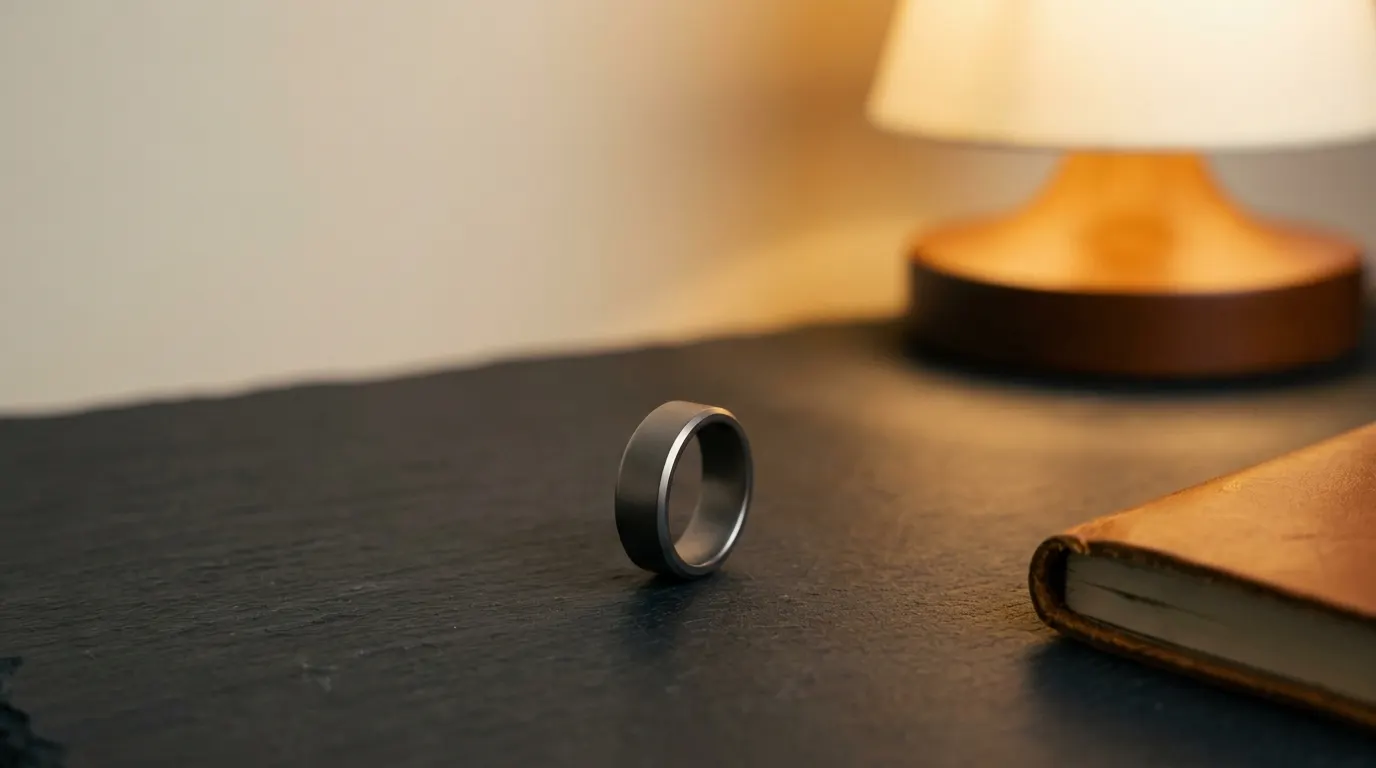
Every sleep-tracker review on the internet starts the same way: a paragraph about how this device "transformed my sleep" followed by 2,000 words of feature list. Most of those reviews don't tell you the inconvenient bit — that the device only matters if you actually act on its data, and that the difference between sleep trackers is mostly accuracy, comfort, and how much the subscription costs you over five years. Oura Ring 4 wins on accuracy and (mostly) on comfort. It loses on the lifetime cost compared to a one-time-purchase wearable. Whether it earns that recurring spend depends entirely on whether you'll look at the data tomorrow morning and the morning after.
Our verdict
Buy the Heritage finish at £349 if you've decided sleep is something you want to actually measure, not just track casually. The 6-month subscription that comes free with the ring is long enough to build the daily-check habit; after that the £69.99/year is the most defensible recurring spend in consumer health tech. Sleep-stage accuracy is the best on a non-medical device, the HRV signal is genuinely actionable, and the form factor (you forget you're wearing it within a day) is what makes the data continuous enough to mean anything.
Skip Oura if you mainly want a fitness tracker with notifications, GPS, and a screen (buy an Apple Watch or Garmin), if you train at competition intensity and need a sophisticated strain model (Whoop's training pillar is more developed), or if the lifetime subscription cost outweighs the data quality for you (a one-time-purchase Fitbit will give you 70% of the sleep insights for zero recurring spend).
The positives:
- Best-in-class sleep-stage accuracy on a consumer wearable, confirmed across multiple third-party validation studies.
- 7-day battery life — the rare wearable you don't think about charging.
- Continuous body-temperature tracking (genuinely useful for cycle tracking and illness early-warning).
- Ring form factor disappears within a day of wearing it; far more comfortable to sleep in than any wristband.
- The first 6 months of subscription are included with the ring purchase — long enough to actually evaluate the daily-use loop.
What it actually costs in 2026
| Item | UK price | Notes |
|---|---|---|
| Oura Ring 4 — Heritage finish | £349 | Silver, black, or gold |
| Oura Ring 4 — Stealth finish | £399 | Matte black titanium |
| Oura Ring 4 — Gold/Rose Gold finish | £449 | Premium metals |
| Oura Membership (monthly) | £5.99/month | First 6 months free with ring purchase |
| Oura Membership (annual) | £69.99/year | Works out at ~£5.83/month, marginally cheaper than monthly |
| Sizing kit (free) | £0 | Mandatory before ordering — ships 1 week before the ring |
| Battery replacement service (after ~2-3 years) | ~£99 | Done by Oura, ring returned to you refurbished |
Figures verified against Oura's UK pricing page on 30 May 2026 and in line with multiple Reddit r/ouraring purchase confirmations from the past three months. The ring price has been stable through the past four quarters; the subscription cost was last increased in early 2024.
The figure most people miss: the subscription is effectively mandatory. Without an active Membership, the ring shows you basic resting heart rate, basic sleep duration, and basic activity — none of the things that justify a £349 purchase. The honest cost framing is: £349 + £69.99/year forever, which makes the 3-year total cost of ownership roughly £559 and the 5-year total roughly £699. Compare that against Whoop's all-in £30/month subscription (£360/year, £1,800 over 5 years) and Oura looks like the cheaper option over any horizon — but compare it against a one-time £200 Fitbit Sense and Oura is materially pricier.
What it's actually like to use
You order a sizing kit a week before the ring itself (mandatory — finger size matters more than people expect, and ring size shifts between morning and evening). You wear the kit for a day, pick the size that's snug but not tight, and order the actual ring. It arrives in about a week from Oura's UK warehouse, in nicer packaging than the price suggests. Pair to the app in five minutes, charge it (about 20 minutes on the included charger to full), and put it on.
Three observations after a few weeks of typical use:
You forget you're wearing it within a day, which is the entire game for a sleep tracker — the moment you notice the device, you're not measuring natural sleep. The titanium body has no protruding sensors, no buckles, no screen. We've worn ours through showers, the gym, and a swim without incident.
The morning data is genuinely actionable, which is the second part of the game. The Readiness Score (a composite of HRV, resting heart rate, body temperature deviation, recent activity, and prior sleep) is the single most useful number — a 70 means take it easy, a 90 means push, an 85 across consecutive days means you're in a good place. The Sleep Score breaks down into stages (light, deep, REM) with accuracy that researchers have validated against polysomnography (the medical reference) within a few percentage points for total sleep time and reasonable accuracy for stage distribution.
The subscription model takes some getting used to. If you've owned a Fitbit or Garmin where you pay once and own the data forever, Oura's "the ring is hardware, the insights are subscription" model can feel mildly hostile. Two ways to think about it: you're paying for the ongoing development of the app and the algorithm improvements (which do ship regularly), and at £69/year the cost is roughly the price of two coffees a month. We've made peace with it; some don't.
Where it fits versus the alternatives
Versus Whoop: Oura is the better answer for daily-life sleep and recovery tracking. Whoop is the better answer for athletes training at competitive intensity who need a deep strain model and don't mind a wristband. Whoop's lifetime cost is materially higher (£30/month with no hardware cost = £360/year vs Oura's £69/year after year one). Battery life favours Oura by 2-3 days. Comfort favours Oura for most users but Whoop genuinely fits some hand shapes better.
Versus Apple Watch: Different category. Apple Watch is a smartwatch that tracks sleep as one of many features; Oura is a sleep tracker that does almost nothing else. Apple's sleep tracking has improved meaningfully with the Series 10 and the Ultra 2 (much better stage detection than the early years), but it remains less accurate than Oura and significantly worse for HRV trends because of the always-on display drain. If you want one device, Apple Watch. If you want the best sleep data, Oura.
Versus Fitbit Sense 2 / Charge 6: Fitbit gives you about 70% of Oura's sleep insights for a one-time £150-£200 purchase with no subscription. For casual sleep tracking, this is honestly the right call for many buyers — the gap in accuracy only really matters if you're going to act on the data daily.
Versus Eight Sleep Pod: Different category entirely. Eight Sleep is a mattress topper that actively controls bed temperature and tracks sleep from below; Oura is a wearable that just measures. Both have their place — Eight Sleep solves a different problem (temperature regulation as a sleep intervention) at a much higher price point (£1,895+ for the Pod 4).
We covered the full category in Best Sleep Tracker UK 2026 and the broader sleep-stack context in Best Mattress UK 2026.
Who should pay for it
- Anyone serious about sleep optimisation — daily-check habit, sleep-hygiene experimenter, generally curious about HRV and recovery. Single best wearable for this profile.
- Knowledge workers tracking stress and recovery — the HRV and Readiness Score genuinely help with deciding when to push and when to back off.
- Women tracking cycle, fertility, or perimenopause symptoms — Oura's body-temperature tracking is the most accurate consumer device for this, and the Cycle Insights feature is well-developed.
- People who hate wristbands — the ring form factor is the comfort win, full stop.
Who should skip it
- Casual sleep curious — Fitbit Sense or Charge will do the job for less without the recurring spend.
- Competition athletes — Whoop's strain model is better suited to your specific job.
- People who want one device for everything — Apple Watch is the answer; Oura is deliberately not that.
- Anyone who won't open the app daily — the data is only useful if you act on it. If you'd ignore the morning Readiness Score, save the £349.
Final note
The Oura Ring isn't magic. It's a well-calibrated sensor in a comfortable form factor, tied to an app whose insights are good enough that you'll actually use them. The subscription is mildly annoying and the lifetime cost is real. But for anyone for whom sleep is something to be measured and improved — not just tracked — it's the right answer. We'd pay for it.
FAQs
Is the Oura Ring worth £349 plus £69/year?
For anyone serious about understanding their sleep, yes — Oura's sleep-stage and HRV tracking is the most accurate consumer wearable on the market by a meaningful gap, and the data is genuinely actionable. Skip it if you mainly want fitness tracking with notifications and GPS (get an Apple Watch), if you train at competition intensity (Whoop's strain model is better), or if the lifetime subscription cost matters more than the data quality.
Do I have to pay the Oura subscription?
Effectively yes. Without an active Oura Membership, the ring gives you basic sleep, activity, and heart-rate data but loses every feature that justifies the purchase — sleep score breakdown, readiness score, period prediction, body-temperature insights, and the daily personalised guidance. The first 6 months are included free with a new ring; after that it's £5.99/month or £69.99/year. We'd treat the £69/year as part of the ring's cost, not a separate thing.
How does the Oura Ring compare to Whoop?
Oura is the better answer for sleep tracking, HRV monitoring, and recovery insight in normal daily life. Whoop is the better answer if you train at competitive athletic intensity and need a deeper 'strain' model. Whoop has no hardware cost (band is included with the £30/month subscription) but works out more expensive than Oura over any horizon longer than 18 months. Battery life favours Oura (7 days vs Whoop's 4-5). Comfort favours Oura (ring vs wristband) for most users — but not everyone gets on with a ring.
Related tools
Oura Ring
Sleep tracker
Oura is a smart ring that tracks sleep stages, heart-rate variability, temperature, and readiness.
View profileWhoop
Sleep tracker
Whoop is a screenless subscription wearable focused on strain, recovery, and sleep performance.
View profileApple Watch
Sleep tracker
Apple Watch tracks sleep stages alongside full smartwatch features for iPhone users.
View profileFitbit
Sleep tracker
Fitbit offers approachable wrist trackers with a clear sleep score and long battery life.
View profileEight Sleep
Sleep tracker
Eight Sleep makes a smart mattress cover (the Pod) that actively heats/cools and tracks sleep.
View profileRelated guides
Best Sleep Tracker UK 2026
Five honest picks across rings, wristbands, smartwatches and bed-based trackers — verified UK pricing, real subscription costs, and the lifetime-spend traps we'd avoid before clicking buy.
Best Mattress UK 2026
Six honest picks across budget, value, hybrid, and luxury — verified UK pricing, real trial-period limits, and the sticky-billing traps we'd avoid even at sale prices.